Northamptonshire has been called the county of squires and spires, and for good reason. More grand houses per square mile than almost anywhere in England, a castle built by William the Conqueror, the battlefield that decided the English Civil War, Anglo-Saxon churches older than the Norman Conquest, and Elizabethan follies built in secret defiance of the Crown. The county’s heritage runs deep, and much of it is open to the public.
This guide covers the county’s major historic houses, castles, heritage sites and ancient churches, organised by area. We have included opening dates, admission prices, accessibility notes and practical information for each entry. Some sites open only on specific days, so checking before you travel is essential.
All details were accurate at time of research in March 2026. Opening dates, prices and access arrangements change regularly, so we recommend checking directly with each venue before visiting.
—
IMAGE
Search: English stately home parkland
Alt text: Grand English country house set in sweeping parkland with mature trees under blue sky
Credit: Featured image (Unsplash/Pexels)
—
Northampton and the Southern County
The area around the county town contains Northamptonshire’s most visited heritage attraction in Delapre Abbey, the ancestral home of the Spencer family at Althorp, and a series of historic houses and churches that span nearly 1,500 years of English history.
Delapre Abbey | Indoor and outdoor
Grade II* listed building one mile south of Northampton town centre, with 900 years of history spanning its origins as a Cluniac nunnery to its restoration as a heritage visitor attraction
Winner of the Large Visitor Attraction award at the Northamptonshire Tourism Business Awards 2026
Five display zones across the Stable Block and main house tell the abbey’s story from medieval nunnery through country house to record office and back again
The site of the 1460 Battle of Northampton during the Wars of the Roses, with battlefield tours available from the Northamptonshire Battlefields Society
500 acres of free-access parkland surrounding the abbey, with a Walled Garden, formal gardens and riverside paths
The Orangery Cafe serves food and drinks; Hibiscus restaurant offers fine dining on selected evenings
Abbey admission charges apply; the park and grounds are free
Regular events programme including the Delapre Food Festival with artisan makers, chef demos and live-fire cooking
Delapre Abbey has transformed itself from a forgotten municipal building into one of the county’s premier heritage attractions. The restoration is sensitive and thorough, with the display zones walking visitors through nine centuries of history without overwhelming them. The Battle of Northampton connection adds a layer that most heritage sites lack, and the expert battlefield tours bring the 1460 conflict to life on the actual ground where it was fought. The 500 acres of surrounding parkland are free and open all year, making this a site that rewards repeat visits in different seasons.
Address: London Road, Northampton NN4 8AW
Website:https://delapreabbey.org/
Phone: 01604 760010
How to book: Walk in for the park; check website for abbey opening hours and events
Althorp | Indoor and outdoor
Ancestral home of the Spencer family for over 500 years, set in 13,000 acres of parkland six miles northwest of Northampton
The house contains one of Europe’s finest private collections of furniture, paintings and ceramics, including works by Reynolds, Gainsborough and Van Dyck
The island in the ornamental lake is the final resting place of Diana, Princess of Wales
Open to the public during July and August each year, by arrangement with the UK Government reached in 1992
The Stables Cafe, housed in a 1733 Anglo-Palladian stable block designed by Roger Morris, serves refreshments during the open season
Seasonal exhibitions in the Stables block change each year
Adults approximately £21.50, children aged 5 to 15 approximately £11.50, under 5s free
Free parking on site; the grounds include an arboretum and woodland walks
Althorp is the most famous house in Northamptonshire, and the Spencer connection ensures a steady flow of visitors during its two-month summer opening. The house itself deserves attention beyond the Diana association: the art collection is genuinely world-class, the interiors have been maintained with obvious care, and the parkland provides the kind of landscape that only five centuries of continuous ownership can produce. The summer-only opening means you need to plan ahead, and checking exact dates on the website is essential before travelling.
Address: Althorp, Northampton NN7 4HQ
Website:https://www.althorp.com/
How to book: Online via the website; walk-in also available during open season
Holdenby House, Gardens and Falconry | Indoor and outdoor
Elizabethan house seven miles northwest of Northampton, with gardens, a falconry centre and a tearoom
The Elizabethan Garden, planted in 1980 by Rosemary Verey, uses only plants available in 1583
King Charles I was held prisoner at Holdenby in 1647 during the English Civil War; King Charles’ Walk survives in the grounds
The Icarus Falconry Centre houses over 30 eagles, falcons, hawks, buzzards, owls and vultures, with flying displays on every open day
The Stableyard Tearoom serves food and drinks during opening hours
Open on Sundays from April to August, 11am to 4pm, and Bank Holiday Mondays
Special events include The Magic of Easter (April) with magicians, egg hunts and falconry displays
The house opens on selected dates; gardens and falconry are the main visitor draw
Holdenby works because it combines genuine historical significance with live entertainment that holds the attention of visitors who might not seek out a heritage site on its own merits. The falconry displays are the headline draw for many families, and seeing eagles and hawks fly against the backdrop of an Elizabethan house is an experience that few venues in the county can match. The Elizabethan Garden is a considered recreation that rewards close attention, and the Charles I connection gives the house a resonance that extends well beyond its architecture.
Address: Holdenby, Northampton NN6 8DJ
Website:https://www.holdenby.com/
Phone: 01604 770074
How to book: Check website for open days; walk in on advertised dates
Sulgrave Manor | Indoor and outdoor
A mid-16th century Tudor hall house in the village of Sulgrave, built by Lawrence Washington, great-great-great-grandfather of George Washington, first President of the United States
Rescued from dereliction in 1914 and restored as a museum celebrating the Washington family connection
The house retains original Tudor features including the great hall, kitchen and bedrooms
The Washington family coat of arms, featuring stars and stripes that may have influenced the American flag design, is displayed on the house’s exterior
Open from 30 March to 30 September 2026, on Sundays, Mondays and Tuesdays, 10:30am to 4pm (last entry 3pm)
Pop-up talks every Monday and Tuesday at 12:30pm during the open season
No advance tickets needed; walk-ins welcome
Group tours available Wednesday to Friday, April to October, by arrangement
Sulgrave Manor occupies a unique position in Northamptonshire’s heritage: a modest Tudor house in a quiet village that happens to be the ancestral home of the most powerful political dynasty in American history. The Washington connection is presented with a light touch, and the house itself is an engaging example of 16th-century domestic architecture, with rooms that are small enough to feel intimate rather than imposing. The stars and stripes on the family coat of arms, predating the American flag by two centuries, is the detail that most visitors remember.
Address: Manor Road, Sulgrave, Banbury OX17 2SD
Website:https://sulgravemanor.org.uk/
How to book: Walk in during open season; group tours by arrangement
Naseby Battlefield | Outdoor attraction
The site of the decisive battle of the English Civil War, fought on 14 June 1645 between the Royalist army of Charles I and the Parliamentarian New Model Army
The battlefield lies in open farmland near the village of Naseby, approximately 12 miles north of Northampton
The Naseby Battlefield Project runs guided tours approximately eight times per year, with dates typically centred on the June anniversary and December half-anniversary
The battlefield obelisk and memorial column mark key positions from the engagement
Walking routes across the battlefield are freely accessible on public footpaths
A visitor centre is in the planning stages; check the project website for updates
Free to visit the battlefield and memorials; guided tours may have a charge
The village of Naseby has limited facilities; bring food and water
Naseby is where the English Civil War was effectively decided, and walking the battlefield brings that reality home in a way that reading about it cannot. The open farmland has changed remarkably little since 1645, and the guided tours run by the Battlefield Project place you on the ground where the cavalry charged and the infantry lines broke. The site lacks the infrastructure of more developed heritage attractions, which is arguably part of its power: this is history written in landscape rather than in display cases.
Address: Naseby, near Market Harborough, Northamptonshire NN6 6DA
Website:https://naseby.com/
How to book: Check website for guided tour dates; battlefield freely accessible
Lamport Hall and Gardens | Indoor and outdoor
Grade I listed 17th-century hall that was home to the Isham family for over four centuries
The hall houses a significant collection of paintings, furniture, books and family archives
The gardens include formal borders, a rockery, a cutting garden and an Italian garden
Sir Charles Isham introduced garden gnomes to England at Lamport in the 1840s; the sole surviving original gnome is displayed in the hall
The visitor welcome area is housed in the old tack room with a vintage tack collection
The shop sells gifts, gardening products, books by local authors and Lamport-branded products
Under 11s go free; picnics welcome on the stableyard picnic benches
Check website for 2026 opening dates and times
Lamport Hall rewards curiosity. The Isham family collected with enthusiasm over four centuries, and the result is a house that feels like a continuous conversation between generations. The claim to fame as the birthplace of the English garden gnome is cheerfully acknowledged, and the surviving original gnome from the 1840s is a genuine curiosity. The gardens are well maintained without being over-designed, and the family-friendly pricing makes it accessible for a casual visit.
Address: Lamport, Northampton NN6 9HD
Website:https://www.lamporthall.co.uk/
How to book: Check website for opening dates; walk in on open days
The Nene Valley and North Northamptonshire
The eastern half of the county follows the Nene Valley through a landscape dotted with castles, manor houses and heritage sites of national significance. From the ruins of Fotheringhay Castle to the baroque grandeur of Boughton House, this area contains some of the most important historic buildings in England.
Rockingham Castle | Indoor and outdoor
Castle commissioned by William the Conqueror around 1070, set on a hilltop overlooking the Welland Valley near Corby
One of the oldest continuously occupied buildings in England, home to one family for 450 years
Guided outside tours are complimentary with every standard entry ticket; the Long Gallery, Great Hall and furnished rooms span centuries of domestic history
The Wild Garden features a Fairy Door trail and Toadstool Trail for younger visitors
Open in 2026 from 29 March to 26 April (Sundays and Bank Holiday Mondays) and 3 May to 29 September (Tuesdays, Sundays and Bank Holidays); closed 16 August
Adults £19.25, seniors and students £17.70, children 4 to 16 £11.50, under 4 free, family (2 adults + up to 3 children) £49.90
Events in 2026 include David Austin Rose Day (24 June), Queen by Moonlight and ABBA by Moonlight (August)
Wheelchair access to some areas; the Long Gallery is not wheelchair accessible due to historic architecture
Rockingham Castle has the benefit of nearly a thousand years of continuous occupation, which means the rooms tell a genuine story of how a family lived through centuries of English history rather than presenting a frozen moment in time. The hilltop position above the Welland Valley is commanding, and the views from the castle grounds extend across a landscape that has changed remarkably little since William the Conqueror chose this spot. The Wild Garden and fairy trails make it work for families, but the castle’s real strength is its history, told through furnished rooms and knowledgeable guides.
Address: Rockingham, near Corby NN17 3EN
Website:https://rockinghamcastle.com/
Phone: 01536 770240
How to book: Walk in on open days; advance booking recommended for special events
—
IMAGE
Search: medieval castle hilltop England
Alt text: Stone walls and towers of a hilltop castle with views across the Welland Valley countryside
Credit: Inline after Rockingham Castle (Geograph/Wikimedia)
—
Boughton House | Indoor and outdoor
Home of the Montagu family, Dukes of Buccleuch, since 1528; known as the English Versailles for its 17th-century French-influenced architecture
The house was remodelled in 1695 by Ralph Montagu, 1st Duke of Montagu, who served as English ambassador to France
Contains a world-class collection of fine art, tapestries, porcelain, carpets and furniture, including works by El Greco and Gainsborough
Some of the best-preserved baroque State Rooms in the British Isles
Open at Easter and in August for guided tours; groups can visit year-round by appointment
Gardens open with the National Garden Scheme; returning October 2026
Great Hall Tour (includes gardens): adults £14, children 5 to 16 £8, under 5s free
Set within a wider estate with parkland walks
Boughton House justifies its Versailles comparison more than most grand claims. The French influence is unmistakable in the architecture, and the interiors contain collections that would be the centrepiece of any national museum. The limited opening dates mean it never feels overrun, and the guided tours provide access to rooms that retain their original grandeur. The El Greco alone is worth the visit, but the cumulative effect of the tapestries, the state rooms and the parkland setting is what makes Boughton exceptional.
Address: Geddington, near Kettering NN14 1BJ
Website:https://www.boughtonhouse.co.uk/
How to book: Check website for opening dates; book via website or phone
Kirby Hall | Indoor and outdoor
One of England’s greatest Elizabethan and 17th-century houses, managed by English Heritage, near Gretton outside Corby
Founded in 1570, the house rose to prominence before falling into romantic ruin; rescued after 1930
A £180,000 exhibition traces the story of Kirby Hall through interactive displays, archaeological finds and theatrical recreations
The great gardens, described as the finest in England when they were created by Sir Christopher Hatton IV in the 1690s, have been recreated to their late 17th-century appearance
The Tapestry Trail lets visitors follow in the footsteps of a royal visit, culminating in a recreation of a grand crimson and gold bed
Reopens 28 March 2026; both members and non-members must book a specific date and time slot in advance
English Heritage members enter free; non-member prices on the website
Partial ruin gives it a dramatic atmosphere that fully restored houses cannot replicate
Kirby Hall is one of those places where ruin adds rather than detracts. The partial collapse of the house means you experience the architecture at a scale that intact buildings cannot offer: roofless rooms open to the sky, walls that reveal their construction, and a sense of time passing that no restoration can reproduce. The recreated gardens are a counterpoint of order and precision, and the new exhibition brings historical context that the building alone cannot provide. Booking in advance is essential.
Address: Deene, near Corby NN17 3EN
Website:https://www.english-heritage.org.uk/visit/places/kirby-hall/
How to book: Book online via English Heritage website (required for all visitors)
—
IMAGE
Search: Elizabethan ruin garden England
Alt text: Dramatic ruins of an Elizabethan great house with recreated formal gardens in the foreground
Credit: Inline after Kirby Hall (Geograph/Unsplash)
—
Deene Park | Indoor and outdoor
Country manor five miles northeast of Corby, home to the Brudenell family for over 500 years and fourteen generations
The family’s most famous member, the 7th Earl of Cardigan, led the Charge of the Light Brigade at Balaklava in 1854
A minimum of ten rooms are open on visiting days, each with distinctive character and furnishings collected over centuries
The gardens feature a David Hicks parterre with topiary teapots, mixed borders, a four seasons garden, lakes and wild gardens
Open in 2026 on Easter weekend (5-6 April), selected Bank Holidays, and every Sunday and Tuesday from 23 June to 31 August
House and Gardens: adults £18, children 5 to 15 £8, family (2 adults + up to 3 children) £50, under 5s free; Gardens only: adults £11, children £6, family £30
House entry requires a timed slot booking
The house is still lived in by the Brudenell family, giving it an atmosphere that empty show houses lack
Deene Park has the feel of a house that is genuinely lived in rather than preserved in aspic. The Brudenell family’s continuous occupation over five centuries means the furnishings and objects have accumulated naturally rather than being curated for display, and the result is rooms that feel personal in a way that institutionally managed properties rarely achieve. The Charge of the Light Brigade connection gives the house a military romance, and the gardens, particularly the David Hicks parterre with its topiary teapots, show that the family has not lost its sense of humour.
Address: Deene, Corby NN17 3EW
Website:https://www.deenepark.com/
How to book: Book timed house entry via website; gardens walk-in on open days
Rushton Triangular Lodge | Outdoor attraction
An Elizabethan folly built between 1593 and 1597 by Sir Thomas Tresham, managed by English Heritage
Every feature comes in threes, symbolising the Holy Trinity: three sides, three floors, trefoil windows, three triangular gables, each side measuring 33 and a third feet
Built as a secret declaration of Tresham’s Catholic faith during a period when Catholicism was illegal
Tresham was repeatedly fined and imprisoned for his beliefs; the lodge is his most defiant architectural statement
Part of a trio of Tresham buildings in the county, alongside Lyveden and the Rothwell Market House
Small site that can be visited in under an hour; combine with nearby Rushton Hall (now a hotel) for context
Check English Heritage website for 2026 opening dates and prices
Free for English Heritage members
The Triangular Lodge is one of the most extraordinary small buildings in England. Every dimension, every ornament, every window is a coded reference to the number three and the Holy Trinity, built by a man who faced fines, imprisonment and the threat of execution for his Catholic faith. It is small enough to take in during a short visit, but the density of symbolism rewards closer attention, and the story of Tresham’s defiance adds an emotional weight that the architecture alone cannot convey. Visit it alongside Lyveden for the full picture of one man’s remarkable legacy.
Address: Rushton, near Kettering NN14 1RP
Website:https://www.english-heritage.org.uk/visit/places/rushton-triangular-lodge/
How to book: Check English Heritage website for opening dates
Lyveden | Outdoor attraction
An unfinished Elizabethan garden lodge and moated garden near Oundle, owned by the National Trust
Commissioned by Sir Thomas Tresham (who also built the Triangular Lodge at Rushton) to symbolise his Catholic faith
The lodge has stood incomplete since Tresham’s death in 1605, with the roofline never finished
Built in the shape of a Greek cross, with Christian numerology encoded throughout the architecture
Reconstructed Elizabethan orchard of 300 fruit and nut trees; moats, viewing terraces and open countryside
Tresham’s son Francis was implicated in the Gunpowder Plot of 1605, adding another layer to the family story
Adults £9.50, children £4.75, under 5s free; free for National Trust members
Open daily from 10am; family trails and seasonal events during school holidays
Lyveden is the most atmospheric of the Tresham buildings, partly because of its setting in open countryside and partly because it was never finished. The lodge stands against the sky with its incomplete roofline, a monument to ambition interrupted by death, and the surrounding moated garden has been carefully restored to reveal the geometric precision of Tresham’s vision. The Gunpowder Plot connection, through Tresham’s son Francis, adds a conspiratorial dimension that older children find genuinely gripping.
Address: Harley Way, near Oundle PE8 5AT
Website:https://www.nationaltrust.org.uk/visit/leicestershire-northamptonshire/lyveden
How to book: Walk in or via National Trust website
Fotheringhay Castle | Outdoor attraction
The castle where Mary Queen of Scots was tried and executed on 8 February 1587, and the birthplace of King Richard III in 1452
Only earthworks and the castle mound remain; the stone was removed after the execution
Freely accessible at all times with no admission charge or set opening hours
The castle mound provides views across the River Nene meadows and towards the village church
Fotheringhay Church (the Collegiate Church of the Blessed Virgin Mary and All Saints) is one of the finest Perpendicular Gothic churches in England
The church contains the tomb of Edward, Duke of York, killed at Agincourt in 1415
Combine with a riverside walk along the Nene Way for a half-day outing
No facilities at the castle site; the village currently has no open pub
Fotheringhay is a place where the weight of history is carried by absence. The castle where Mary Queen of Scots was executed and Richard III was born has been reduced to a mound of earth beside the river, and that emptiness is more eloquent than any preserved ruin could be. The church compensates with its architectural grandeur, and the Agincourt connection through the Duke of York’s tomb adds yet another layer to a village that punches well above its size in historical significance.
Address: Fotheringhay, near Oundle PE8 5HZ
Website:https://www.english-heritage.org.uk/visit/places/fotheringhay-castle/
How to book: Freely accessible at all times
—
IMAGE
Search: English village church river
Alt text: Perpendicular Gothic church tower rising above river meadows in a historic English village
Credit: Inline after Fotheringhay Castle (Unsplash/Pexels)
—
Chester House Estate | Indoor and outdoor
A £14.5 million heritage attraction near Wellingborough, demonstrating over 10,000 years of human activity in the Nene Valley
Based around a Grade II listed 17th-century farmhouse overlooking the River Nene, with Roman town remains in the surrounding fields
A state-of-the-art Archaeological Archive Centre holds over 20,000 boxes of artefacts from across Northamptonshire
The artisan farmyard shopping courtyard includes independent retail units and Saxby’s Cider shop
The Farmhouse Cafe serves breakfast and lunch using locally sourced produce; a pizza restaurant is also on site
Open Tuesday to Sunday, 10am to 4pm; closed Mondays except bank holidays and school holidays
Free entry and free parking
Bed and breakfast accommodation and a wedding venue are also available on site
Chester House Estate is the newest major heritage attraction in Northamptonshire, and the scale of the investment shows. The site spans 10,000 years of human activity, from prehistoric settlement through a Roman walled town to a 17th-century farmhouse, and the Archaeological Archive Centre gives the site a serious academic foundation. The free entry and good facilities make it an easy visit, and the combination of heritage, food and independent shopping means it appeals to visitors who might not seek out a heritage site specifically.
Address: Chester Farm, Irchester, Wellingborough NN29 7BL
Website:https://chesterhouseestate.org/
How to book: Walk in; no booking needed
West Northamptonshire, Daventry and the Borders
The western reaches of the county contain some of its most atmospheric heritage sites, from National Trust properties set in tranquil parkland to one of England’s oldest churches. The landscape here is quieter and less visited, which adds to the sense of discovery.
Canons Ashby | Indoor and outdoor
A tranquil Tudor manor house built by the Dryden family using the remains of a medieval priory, owned by the National Trust since 1981
The house and gardens have survived largely unaltered since 1710, giving them a rare authenticity
Elizabethan wall paintings and Jacobean plasterwork are among the interior highlights
St Mary’s Church, the only remaining part of a 13th-century Augustinian priory, stands adjacent to the house
The 18th-century terraced garden includes flowers, fruit, vegetables and a paddock
Tearoom in the old stables serves hot and cold meals; second-hand bookshop in the old brewhouse
Adults £12, children £6, under 5s free; free for National Trust members
Three manual wheelchairs available at Visitor Reception; buggy service to the house
Canons Ashby has a quality that many grander properties lack: authenticity. The house was never subjected to a wholesale Victorian makeover, which means the rooms retain their original character across several centuries. The wall paintings and plasterwork are the standout features, but the overall atmosphere of quiet preservation is what makes it memorable. The adjacent priory church adds a medieval dimension, and the terraced garden provides structure to a visit without the formality of a stately home garden.
Address: Canons Ashby, Daventry NN11 3SD
Website:https://www.nationaltrust.org.uk/visit/leicestershire-northamptonshire/canons-ashby
Phone: 01327 861901
How to book: Walk in or via National Trust website
—
IMAGE
Search: Tudor manor house garden England
Alt text: Honey-coloured Tudor manor house with terraced garden and medieval priory church alongside
Credit: Inline after Canons Ashby (Unsplash/Pexels)
—
All Saints Church, Brixworth | Indoor attraction
The largest substantially intact Anglo-Saxon church in England, dating from approximately 750 to 850 AD
Founded around 675 AD as a daughter house of the monastery at Peterborough (Medeshamstede)
Built using recycled Roman materials, including slim bricks and masonry from buildings in Leicester and Towcester
Features one of only four remaining Anglo-Saxon stair turrets in England
A ring crypt at the east end, surrounding the apse, is one of only three such crypts in the country
The church has been in continuous use as a place of worship for over 1,200 years
Grade I listed building; free to enter
Located in Brixworth village, close to Brixworth Country Park and Pitsford Reservoir
All Saints at Brixworth is one of those buildings that requires a shift in perspective. It looks like a village church, and in its daily function it is one, but architecturally it is a survival of extraordinary rarity. The recycled Roman materials in its walls connect it to an empire that had collapsed three centuries before it was built, and the Anglo-Saxon stair turret and ring crypt are features that exist in only a handful of churches in the entire country. The fact that it has been in continuous worship for over 1,200 years gives it a living quality that museum pieces cannot match.
Address: Church Street, Brixworth, Northampton NN6 9BZ
Website:https://www.friendsofbrixworthchurch.org.uk/
How to book: Open daily; free admission
Fawsley Hall and Estate | Indoor and outdoor
15th-century hall built by Sir Edmund Knightley, set in parkland landscaped by Capability Brown in the 1760s
The estate was the seat of the Knightley family for centuries and was visited by Elizabeth I in 1575
Fawsley Hall now operates as a country house hotel and spa managed by Hand Picked Hotels
The Capability Brown parkland, including lakes and formal gardens, is accessible via public footpaths
The isolated Church of St Mary the Virgin in the grounds is open to visitors and contains Knightley family memorials
The Knightley Way long-distance footpath passes through the estate
The hall is best experienced as a hotel guest or by booking afternoon tea or a meal
Adjacent to Badby Woods, one of the county’s finest bluebell woodlands
Fawsley Hall is not a conventional heritage attraction: it operates as a hotel, which means the interiors are experienced as a living space rather than a museum. The Capability Brown parkland is accessible on foot, and the combination of lakes, mature trees and the isolated church creates a landscape of genuine beauty. Walking the Knightley Way through the estate provides the most immersive experience of what the Knightley family built over centuries. Afternoon tea in the hall offers a taste of the interior without an overnight stay.
Address: Fawsley, Daventry NN11 3BA
Website:https://www.handpickedhotels.com/hotels/fawsley-hall
How to book: Book afternoon tea or accommodation via the hotel; parkland accessible via public footpaths
Stoke Park Pavilions | Outdoor attraction
Two 17th-century pavilions in Stoke Bruerne, attributed to Inigo Jones and built in the 1630s for Sir Francis Crane
The pavilions are the surviving wings of a grand house that burned down in 1886; the main house between them has gone
Grade I listed buildings representing some of the earliest examples of Palladian architecture in England
The colonnade connecting the pavilions is an 18th-century addition
Visible from the road and from public footpaths across the parkland
The pavilions are privately owned and not generally open to the public, but can be viewed externally
Close to Stoke Bruerne Canal Village, making them easy to combine with a canal walk
Check for occasional open days through the Historic Houses scheme
The Stoke Park Pavilions are a peculiar and beautiful survival: two elegant wings standing either side of a gap where a grand house used to be. The fire that destroyed the main house in 1886 created an accidental architectural composition that is arguably more interesting than the complete building would have been. The Inigo Jones attribution gives them a significance that extends beyond Northamptonshire, and their proximity to Stoke Bruerne’s canal village makes them easy to include in a wider visit.
Address: Stoke Bruerne, Towcester NN12 7RZ
Website:https://www.historichouses.org/
How to book: External viewing from public footpaths; check for open days
Cottesbrooke Hall and Gardens | Indoor and outdoor
Early 18th-century Queen Anne house widely believed to be the model for Jane Austen’s Mansfield Park
The house contains a noted collection of sporting and equestrian paintings
The gardens were designed by a succession of leading designers including Geoffrey Jellicoe, Dame Sylvia Crowe and Robert Weir Schultz
The Wild Garden, Statue Walk, Philosopher’s Garden and formal borders provide variety across the grounds
Open on selected days during the summer season; check the website for 2026 dates
The Brixworth and Cottesbrooke Hunt has historical connections to the estate
Admission charges apply; check website for current prices
The house and gardens are available for private hire and weddings
Cottesbrooke Hall trades on its Mansfield Park connection with a subtlety that suits the house. The Queen Anne architecture is handsome without being showy, the equestrian art collection reflects the estate’s long association with hunting and horses, and the gardens, shaped by some of the 20th century’s most respected designers, are among the best in the county. The limited opening dates add exclusivity, and the literary connection gives visitors a framework for appreciating the house that a purely architectural guide could not provide.
Address: Cottesbrooke, Northampton NN6 8PF
Website:https://www.cottesbrookehall.co.uk/
How to book: Check website for open days
78 Derngate | Indoor attraction
The only house in England designed by Charles Rennie Mackintosh, located in the centre of Northampton
Mackintosh remodelled the interior for the model-maker W.J. Bassett-Lowke in 1916, transforming a modest Victorian terrace house into a bold modernist interior
The geometric patterns, striking colour schemes and innovative use of space were decades ahead of their time
The adjacent 82 Derngate houses a gallery with changing exhibitions on art, design and architecture
Guided tours of the Mackintosh interior run on selected days; booking is recommended
A café serves refreshments
Check website for current opening days and admission prices
Located in central Northampton, close to shops, restaurants and the town’s other heritage sites
78 Derngate is a revelation for anyone who associates Northampton with shoes rather than design. The Mackintosh interior is astonishing in its ambition, transforming a narrow Victorian terrace into a sequence of rooms where geometry, colour and light are manipulated with an intensity that still feels modern over a century later. The fact that it exists in a Northampton side street rather than a grand country house makes it all the more surprising. The guided tours provide essential context, and the gallery next door extends the visit with changing exhibitions.
Address: 78 Derngate, Northampton NN1 1UH
Website:https://www.78derngate.org.uk/
How to book: Book guided tours via the website; gallery walk-in
—
IMAGE
Search: art deco interior geometric pattern
Alt text: Bold geometric patterns and modernist design elements in a Charles Rennie Mackintosh interior
Credit: Inline after 78 Derngate (Unsplash/Pexels)
—
Seasonal Highlights
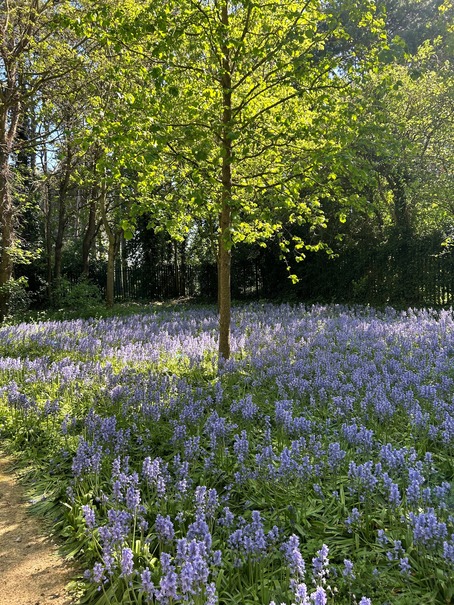
Spring (March to May): Rockingham Castle, Kirby Hall and Sulgrave Manor reopen for the season. Easter events at Holdenby House include falconry displays and egg hunts. Deene Park opens for Easter weekend. The bluebells in the parkland at Fawsley and Badby Woods are at their peak in late April.
Summer (June to August): Althorp opens for its annual July and August season. Boughton House opens in August with guided tours of the State Rooms. Rockingham Castle hosts its rose day and outdoor concerts. Deene Park runs its full summer opening on Sundays and Tuesdays. The Naseby Battlefield anniversary tours take place around 14 June.
Autumn (September to November): Rockingham Castle’s Halloween events run during the October half term. The changing colours in the parkland at Canons Ashby, Fawsley and Deene Park provide an atmospheric backdrop. Many houses close for the season between September and October.
Winter (December to February): Christmas events at Rockingham Castle and Canons Ashby. Delapre Abbey and Chester House Estate remain open year-round. The churches at Brixworth and Fotheringhay are open regardless of season. 78 Derngate in Northampton offers indoor heritage when the weather rules out country houses.
A Note From NorthantsLife
Northamptonshire’s historic houses and heritage sites represent one of the richest concentrations of domestic architecture in England. The county’s relative anonymity among heritage tourists means that even the most popular sites rarely feel overcrowded, and the smaller properties often feel like genuine discoveries.
If anything in this guide has changed since publication, or if we have overlooked a heritage site that deserves to be included, please get in touch through the NorthantsLife website. We will update the guide to reflect the latest information.
Before You Go
Many historic houses open only on specific days and seasons; always check the venue website before travelling, especially for Althorp, Boughton House, Deene Park and Rockingham Castle
English Heritage membership gives free entry to Kirby Hall and Rushton Triangular Lodge; National Trust membership covers Canons Ashby and Lyveden
Rockingham Castle, Deene Park and Kirby Hall all require or recommend advance booking for house entry
Comfortable shoes are recommended for sites with extensive grounds, particularly Fawsley, Althorp and Boughton
Chester House Estate and Delapre Abbey park are free to enter and open year-round, making them good options for spontaneous visits
Fotheringhay Castle and Naseby Battlefield are outdoor sites with no shelter or facilities; dress for the weather and bring water
Accessibility varies significantly between properties; Canons Ashby and Chester House Estate offer the best wheelchair access, while historic houses with narrow staircases may have limited access
Photography policies vary; check at each venue before taking pictures inside the house
Combining two or three nearby sites makes the most of a day: Kirby Hall and Deene Park are minutes apart, as are Rushton Triangular Lodge and Boughton House